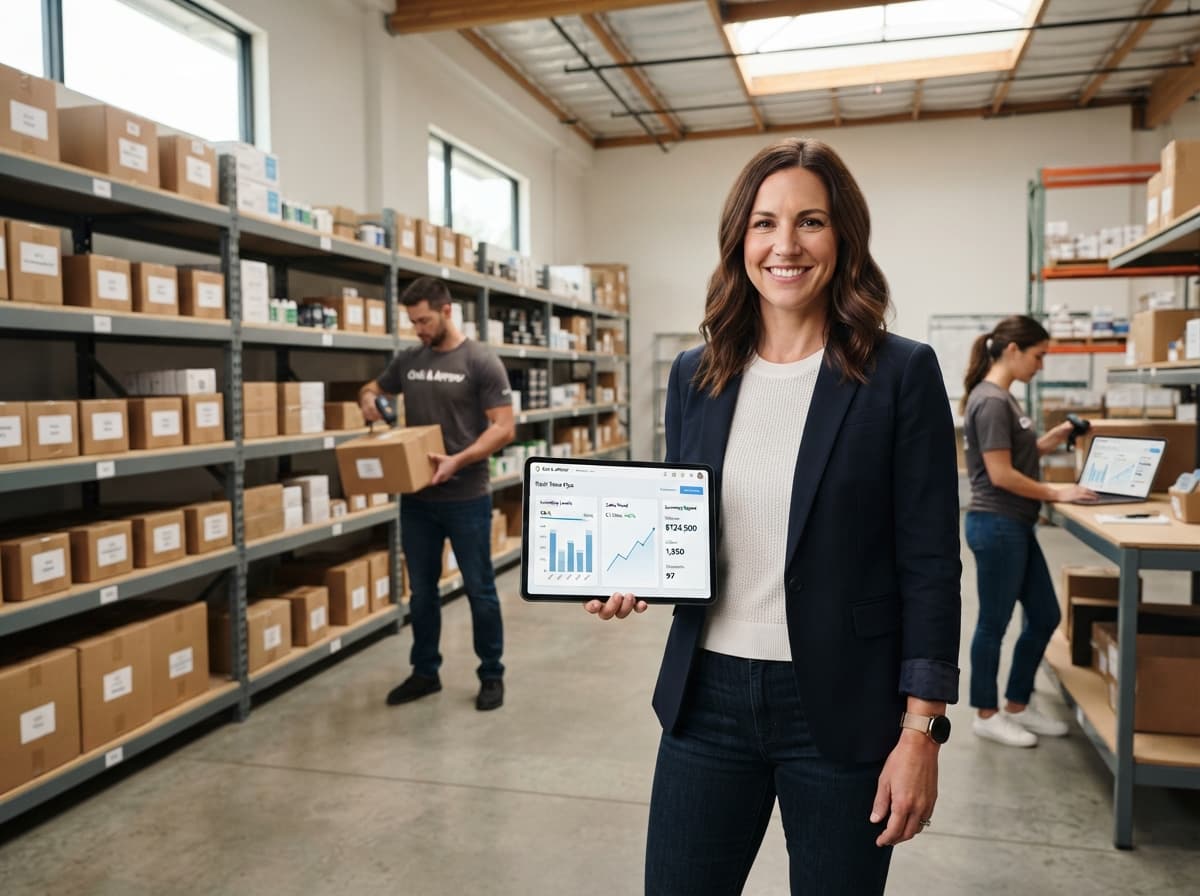
ERP, short for Enterprise Resource Planning, sounds like something only large corporations need. In practice, it simply means running your key operations, such as inventory, sales, purchasing, and finance, from one connected system instead of a patchwork of files and apps.
For a growing business, that connection is where the value is. When a sale automatically updates stock, and stock automatically informs purchasing, everyone works from the same numbers.
What an ERP system typically covers
- Inventory: stock levels across branches and warehouses, movements, and reorder points.
- Sales and orders: quotes, orders, invoices, and customer history in one place.
- Purchasing: purchase orders, suppliers, and deliveries linked to inventory.
- Finance: receivables, payables, and expenses, ready for your accountant.
- Reports and dashboards: sales, margins, and stock value without manual consolidation.
- Users and roles: each team sees and edits only what their job requires.
The benefits you feel first
Accurate inventory
Knowing exactly what you have, and where, prevents two expensive problems at once: running out of best-sellers and tying up cash in stock that does not move.
Decisions based on today's numbers
Instead of waiting for month-end reports, owners can check sales, margins, and stock at any time. That makes pricing, purchasing, and hiring decisions faster and more confident.
Less double entry
When departments share one system, an order entered once flows to the warehouse, billing, and reports automatically. Fewer handoffs mean fewer mistakes.
Room to grow
Adding a branch, a warehouse, or a new product line becomes a setup task rather than a new set of spreadsheets to manage.
When is the right time?
Common signs include managing stock across more than one location, spending days reconciling reports, frequent stock discrepancies, and growth that is being held back by manual work. If your team spends more time updating records than using them, an ERP is worth exploring.
Ready-made ERP or custom-built?
Large ready-made ERP suites are powerful but can be expensive, complex, and built around processes that do not match how your business runs. A custom ERP focuses on the modules you actually use, fits your workflow, and grows one module at a time, which often suits small and mid-sized Philippine businesses better.
Making implementation smooth
- Document how orders, stock, and payments move through the business today.
- Prioritize the first module and agree on a fixed scope.
- Clean up and import existing data such as products, customers, and opening stock.
- Train each team on the screens they will use, and run a short parallel period.
- Review usage after launch and plan the next module based on real feedback.
The bottom line
An ERP system is not about technology for its own sake. It is about giving a growing business one reliable picture of its operations, so the team spends less time chasing numbers and more time acting on them.